

Heat pumps are becoming a popular solution for both heating and cooling residential and commercial spaces. They are energy-efficient, environmentally friendly, and versatile systems that can be used for both heating and cooling depending on the season. Among the different types of heat pumps, monoblock and split heat pumps are two of the most widely used configurations. In this blog, we will compare the design, installation, and efficiency of monoblock and split heat pumps, including options for DC inverter technology, and help you decide which is best suited for your specific needs.
What is a Heat Pump?
A heat pump is a device that transfers heat from one place to another. In the winter, it extracts heat from the outside air (even when temperatures are cold) and moves it indoors. In the summer, it operates in reverse, expelling heat from the indoor air to the outside, thus cooling the space. Heat pumps are highly efficient because they don’t generate heat; they only move it using electricity to power the compressor and refrigerant cycle.
While heat pumps can be used in a variety of applications, two of the most common configurations for residential and commercial systems are monoblock and split heat pumps. Understanding the differences between these two types will help you choose the best option for your building.
Monoblock Heat Pumps: Overview and Benefits
A monoblock heat pump is a single-unit, all-in-one system that contains the compressor, condenser, evaporator, and other essential components in one compact outdoor unit. Monoblock heat pumps are self-contained, making them simple and quick to install.
Key Features of Monoblock Heat Pumps:
All-in-One Design: All components are integrated into one unit, which simplifies installation and reduces space requirements.
DC Inverter Technology: Many monoblock heat pumps come with DC inverter technology, allowing the system to adjust the compressor speed based on demand, improving efficiency and providing more precise temperature control.
Compact and Efficient: Monoblock units are generally smaller in size, making them ideal for spaces with limited room for installation.
Applications of Monoblock Heat Pumps:
Residential homes with limited space for installation
Small to medium-sized commercial buildings
Retrofit projects where existing ductwork or other infrastructure is in place
Advantages of Monoblock Heat Pumps:
Simple Installation: Because the components are contained in one unit, installation is faster and more straightforward, typically requiring less space and fewer labor costs.
Lower Installation Costs: The all-in-one design typically results in lower installation costs compared to split systems.
Energy Efficient: DC inverter technology ensures energy-efficient operation, adjusting the compressor speed to meet the cooling or heating demand.
Ease of Maintenance: With fewer components and a more compact design, monoblock heat pumps are generally easier to maintain and repair.
Disadvantages of Monoblock Heat Pumps:
Limited Capacity: Monoblock systems are generally suited for smaller to medium-sized applications. They may not provide enough capacity for large homes or buildings with high heating or cooling demands.
Noise Levels: Since all components are housed in a single unit, the monoblock system may produce more noise compared to split systems, which can be a concern in residential areas.
Split Heat Pumps: Overview and Benefits
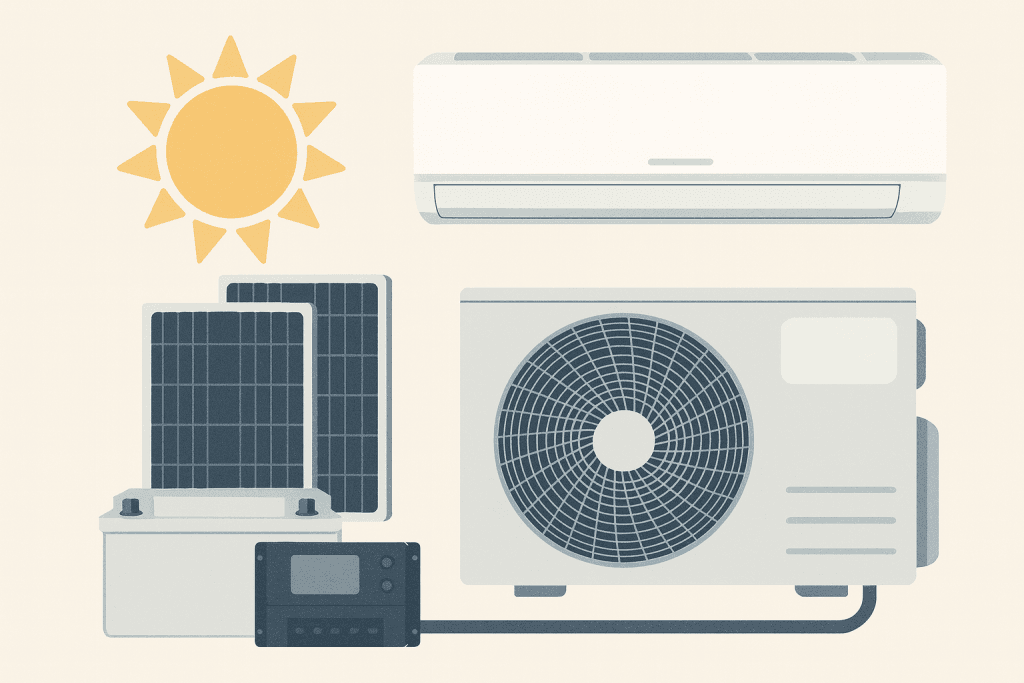
A split heat pump consists of two main components: an outdoor unit (which houses the compressor, condenser, and other components) and an indoor unit (which houses the evaporator). The two units are connected by refrigerant piping, which circulates refrigerant between them to transfer heat.
Key Features of Split Heat Pumps:
Dual Units: The system includes separate indoor and outdoor units, providing greater flexibility in installation and positioning.
DC Inverter Technology: Similar to monoblock systems, many split heat pumps are equipped with DC inverter technology for improved energy efficiency and precise temperature control.
Flexible Design: Multiple indoor units can be connected to one outdoor unit, making split heat pumps ideal for multi-zone heating and cooling.
Applications of Split Heat Pumps:
Larger residential homes or multi-family buildings
Commercial spaces requiring multiple temperature zones
New construction or buildings with adequate space for both indoor and outdoor units
Advantages of Split Heat Pumps:
Higher Capacity: Split systems are generally capable of handling larger heating and cooling loads, making them ideal for larger homes or commercial spaces.
Flexible Installation: The ability to install the outdoor unit in a variety of locations (e.g., on the roof, ground, or wall) provides more flexibility for installation.
Quieter Operation: Since the compressor is located outside, split heat pumps typically produce less noise indoors, making them more suitable for noise-sensitive environments.
Zoning Capabilities: Multiple indoor units connected to a single outdoor unit allow for precise control of different zones or rooms, enhancing comfort and energy efficiency.
Disadvantages of Split Heat Pumps:
Higher Initial Cost: Split systems generally come with higher upfront costs due to the need for two units and the installation of refrigerant piping between them.
More Complex Installation: Installation is more time-consuming and requires a professional to run refrigerant lines and install both the indoor and outdoor units.
Monoblock vs Split Heat Pumps: A Comparison
| Feature | Monoblock Heat Pumps | Split Heat Pumps |
| Design | Single-unit design | Two separate units (indoor and outdoor) |
| Installation | Easier, faster installation | Requires more time and expertise |
| Energy Efficiency | DC inverter available for energy savings | DC inverter available for greater savings |
| Noise | May generate more noise (all components in one unit) | Quieter operation with the compressor outside |
| Capacity | Best for smaller to medium-sized spaces | Suitable for larger buildings and multiple zones |
| Space Requirements | Requires less space | Requires space for both indoor and outdoor units |
| Maintenance | Simpler, easier maintenance | Requires maintenance for both units |
| Cost | Generally lower installation cost | Higher initial cost due to dual units |
How to Choose Between Monoblock and Split Heat Pumps
When deciding between monoblock and split heat pumps, several factors need to be considered:
1. Building Size and Complexity
Monoblock heat pumps are ideal for smaller to medium-sized homes or commercial spaces. They are more suitable for areas with limited space for installation.
Split heat pumps are better suited for larger spaces, such as large homes, multi-family units, or commercial buildings, where the increased capacity and multi-zone flexibility are necessary.
2. Installation Space and Location
Monoblock systems are more compact, making them perfect for installations where space is limited, such as in residential buildings or retrofit projects.
Split systems require space for both the indoor and outdoor units. The outdoor unit can be installed in various locations, which may be a consideration depending on your building’s layout.
3. Energy Efficiency Needs
Both monoblock and split systems can be energy-efficient, especially when equipped with DC inverter technology. However, split systems often offer better long-term energy savings, particularly for larger applications with multiple zones.
4. Noise Considerations
If noise is a concern, split heat pumps are typically the better choice, as the compressor is located outside the building, reducing indoor noise levels. Monoblock systems may produce more noise since all components are housed in one unit.
5. Budget
Monoblock heat pumps tend to be more affordable both in terms of upfront installation costs and ongoing maintenance. They are a cost-effective choice for smaller spaces.
Split systems, while more expensive initially, offer greater flexibility, higher capacity, and longer-lasting performance, making them a worthwhile investment for larger buildings.
Frequently Asked Questions (FAQ)
1. What is the lifespan of a monoblock or split heat pump?
Both types of heat pumps typically last 15 to 20 years with proper maintenance. Regular servicing ensures that the system operates efficiently over the long term.
2. Can I retrofit a monoblock heat pump into my existing system?
Yes, monoblock heat pumps are ideal for retrofit projects, especially if your existing heating or cooling system needs to be replaced. The compact design makes installation simpler.
3. How do DC inverter heat pumps save energy?
DC inverter heat pumps adjust the compressor speed based on the temperature demand, preventing the system from running at full capacity continuously. This results in less energy consumption, reduced wear and tear, and more precise temperature control.
4. Can a monoblock heat pump be used for larger spaces?
Monoblock systems are generally better for smaller to medium-sized applications. For larger spaces with high heating or cooling demands, a split heat pump would be more suitable.
5. How noisy are monoblock heat pumps compared to split systems?
Monoblock heat pumps tend to be noisier because all components are housed in the same unit, which is placed outside the building. In contrast, split systems are quieter, as the compressor is located outside, reducing noise indoors.
Conclusion
Choosing between a monoblock and a split heat pump depends on your specific heating and cooling needs, building size, and budget. Monoblock heat pumps are perfect for smaller homes and commercial spaces, offering easy installation and energy efficiency. Split heat pumps, on the other hand, provide higher capacity and flexibility, making them ideal for larger applications and multi-zone cooling.
At PureMind, we offer a variety of heat pump solutions, including both monoblock and split systems equipped with the latest DC inverter technology. Explore our range of energy-efficient heat pumps today by visiting our website. Our team can help you select the right system for your space, ensuring optimal comfort and efficiency throughout the year.